
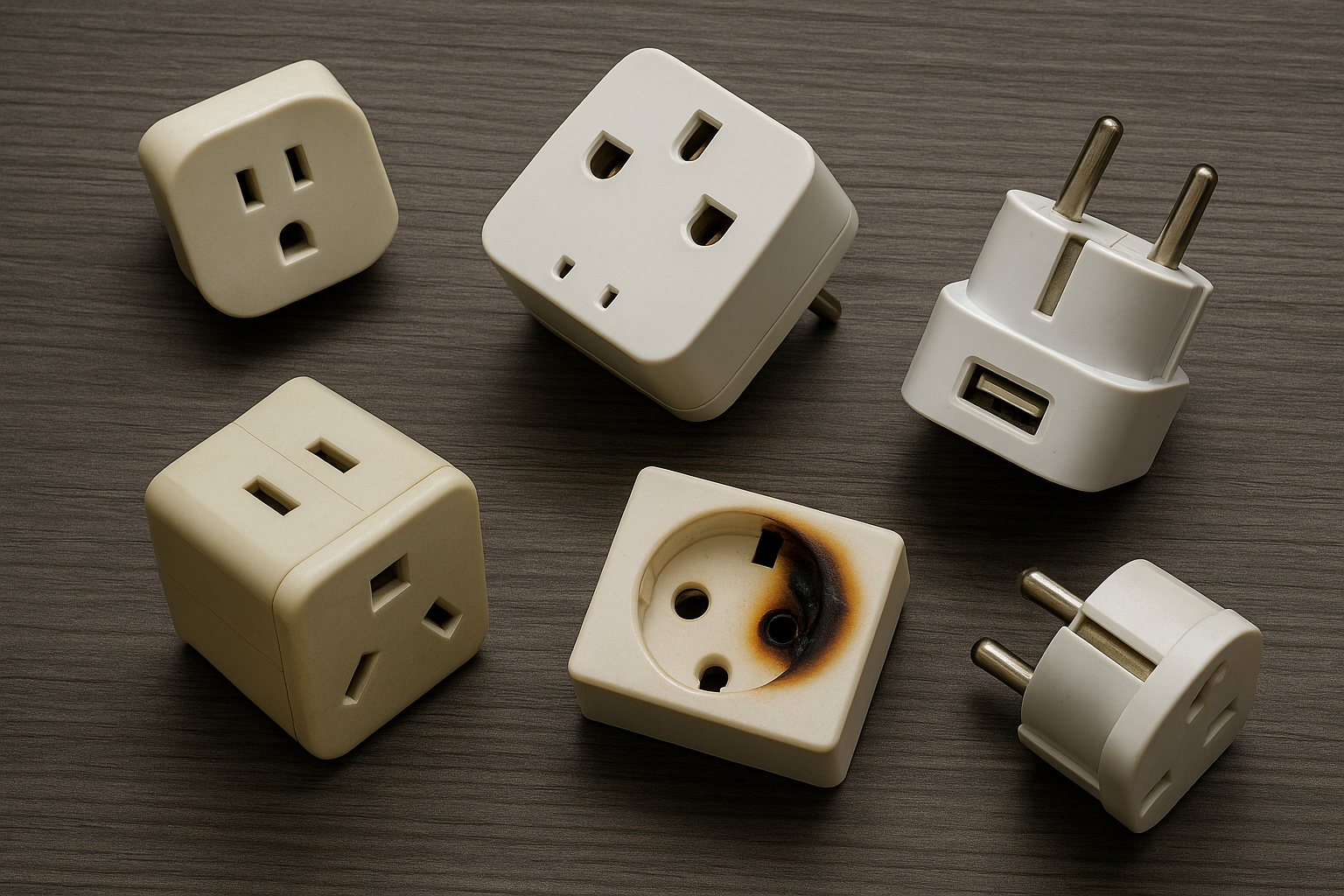
Walk into any home and you’ll find plug adapters everywhere:
- travel adapters
- cheap multi-plug cubes
- EU–UK adapters
- US–EU adapters
- 2-pin to 3-pin grounding adapters
- extension cord adapters
- USB plug adapters
- “smart” plug adapters
- cheap unbranded converters from Amazon
People treat them like harmless accessories.
But here’s the truth:
Plug adapters are one of the most common hidden fire hazards in a home.
They fail constantly.
They overheat silently.
They loosen over time.
They arc inside the outlet.
They stress the wiring system beyond design limits.
And most of them are cheaply made with no real engineering behind them.
Today we break down exactly why plug adapters fail — electrically, mechanically, and thermally — and why these tiny devices can quietly start fires long before anyone notices something is wrong.
Let’s get into it.
⚡ The First Truth: Plug Adapters Are Mechanical Devices Taking Electrical Loads They Weren’t Designed For
Every plug and socket type in the world has strict standards for:
- contact pressure
- pin diameter
- insertion depth
- surface area
- current rating
- heat dissipation
Good adapters follow these standards.
Cheap adapters do not.
To work safely, an adapter must maintain tight metal-to-metal contact under load.
But most adapters use:
- thin metal contacts
- low-tension springs
- cheap copper-plated steel
- poor geometry
- loose tolerances
This leads to:
- poor pressure
- small contact area
- looseness
- heat buildup
- arcing
And once heat or arcing begins, the failure accelerates fast.
⚡ Reason #1: Loose Contacts Create Massive Resistance → Heat → Fire
Electricity is simple: Heat=I2×R\text{Heat} = I^2 \times RHeat=I2×R
When a plug adapter has:
- weak spring pressure
- thin contact metal
- worn contacts
- oxidation
…the resistance increases.
Even a tiny increase (0.2–0.5 ohm) at 10–16A load results in dangerous heating.
That heat:
- softens plastic
- loosens contacts further
- increases resistance
- creates more heat
This runaway cycle leads to:
- melting
- connector charring
- glowing contacts
- internal arcing
- catastrophic burnout
Most plug adapter fires start exactly this way.
⚡ Reason #2: Cheap Adapters Use Shockingly Thin Metal Contacts
To save money, many adapters use:
- copper-plated steel
- stamped tin plates
- extremely thin brass
These metals:
- deform easily
- lose spring tension
- oxidize quickly
- don’t tolerate mechanical load
- bend permanently after a few insertions
Good contacts should be:
- thick
- springy
- corrosion-resistant
- perfectly shaped
Cheap adapters?
Paper-thin contacts that wear out in weeks.
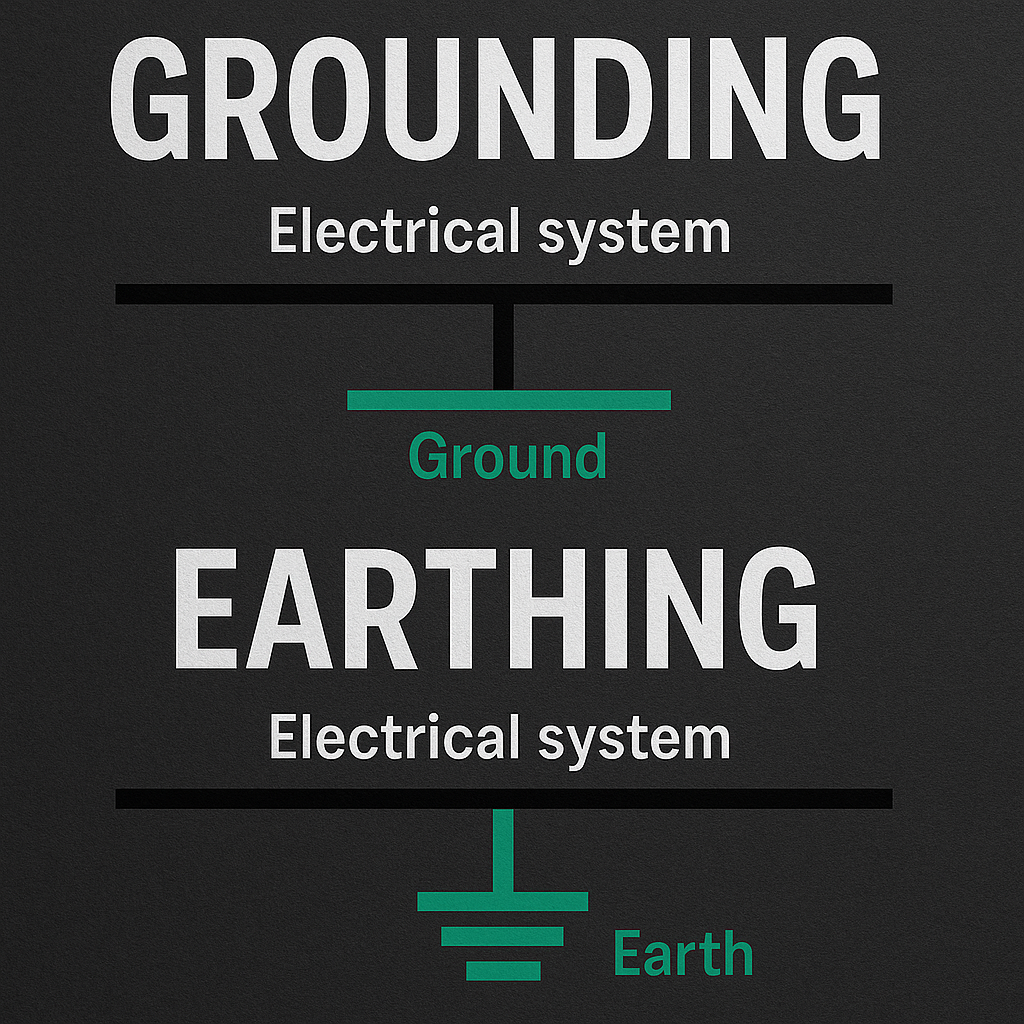
⚡ Reason #3: Plug Adapters Often Break the Grounding System
Grounding is critical for:
- short-circuit safety
- surge protection
- appliance safety
- static discharge
- shielding
But many adapters:
- drop the ground
- provide a fake ground (only cosmetic)
- use a loose ground clip
- have ground prongs not bonded to anything
- rely on weak mechanical contact
The result:
- appliances become ungrounded
- metal cases become shock hazards
- surge protectors stop working
- RCD/GFCI protection is compromised
Some travel adapters are basically ungrounded shells with pretty plastic.
⚡ Reason #4: Multi-Plug Adapters Overload Sockets Not Designed for High Load
People love plugging into adapters:
- heaters
- kettles
- air fryers
- hair dryers
- irons
- toasters
These devices draw:
- 1500W–3000W (EU)
- 1200W–1800W (US)
Most wall outlets were designed for:
- one high-power appliance
not three.
When an adapter multiplies the number of loads on a socket, you get:
- overheated outlet contacts
- overheated wiring
- overheated adapter plug
- backplate melting
- scorched plastic inside the wall
Outlets were designed for one plug tightly inserted, not:
- 3 cheap extension cube plugs
- all at 10–16A simultaneously
⚡ Reason #5: Side-Loaded Adapters Cause Internal Contact Loosening
Big cubes or weighty adapters sag out of the wall.
This sag:
- reduces contact pressure
- unevenly loads the outlet pins
- introduces mechanical leverage
- loosens the outlet’s internal metal springs
- causes micro-movement
That micro-movement = arcing.
Arcing = carbon deposits.
Carbon = conductive and flammable.
A sagging adapter can ruin an outlet in hours.
⚡ Reason #6: Cheap USB Plug Adapters Overheat Due to Poor SMPS Design
USB plug adapters contain:
- MOSFETs
- transformer
- diodes
- capacitors
- feedback circuits
Cheap ones:
- use tiny transformers
- skip proper isolation
- have terrible thermal design
- cheap capacitors
- minimal EMI filtering
- run at 80–120°C internally
- fail early
And when they fail:
- output voltage spikes
- insulation breaks down
- fire risk increases
These failures have burned:
- beds
- couches
- outlets
- power strips
USB adapters are one of the most common causes of fires.
⚡ Reason #7: Travel Adapters Are Not Voltage Converters (People Confuse These!)
Many people think:
- “This adapter converts 120V to 230V.”
- “I can use my US appliance in Europe.”
No.
Travel adapters only change shape, not voltage.
If a 120V appliance is plugged into 230V:
- it draws 2× current
- internal transformer overheats
- wires melt
- motor burns out
- voltage regulator explodes
- the adapter melts
- sometimes an entire fire starts
This is one of the most frequent travel-related electrical failures.
⚡ Reason #8: Adapters Wear Out Outlets in the Wall
Every outlet has internal spring contacts.
Adapters accelerate wear because:
- they wobble
- they exert leverage
- their pins deform the outlet’s contacts
- they cause repetitive micro-motion
Over time:
- the outlet becomes loose
- resistance increases
- heat builds
- the outlet overheats from the inside
- failure occurs behind the wall plate
⚡ Reason #9: Many Plug Adapters Are Flat-Out Non-Compliant With Standards
Many cheap adapters:
- claim CE but are fake
- skirt UL/BSI/ASTA testing
- use substandard materials
- melt below 130°C
- lack flame-retardant plastic
- fail grounding tests
- cannot handle rated current
Some are so bad that electrical inspectors destroy them on sight.
⚡ Reason #10: Plug Adapters Fail Silently Before They Fail Violently
Early failure signs:
- warmth
- discoloration
- loose feeling
- intermittent power
- crackling sounds
- smell of hot plastic
Late-stage failure:
- arcing
- melting
- smoke
- flame
Most people never notice the early warnings.
⚡ How to Choose a Safe Plug Adapter (Engineer-Approved Checklist)
Look for:
✔ Thick, solid pins (not hollow)
✔ Strong spring contacts
✔ Ground pin continuity
✔ UL/BSI/ASTA certification
✔ Flame-retardant plastic (UL94-V0 or V1)
✔ No rattling inside
✔ Tight fit into the outlet
✔ Rated 10–16A minimum (EU) / 15A (US)
✔ Small, light design (not a big cube)
✔ No exposed metal when partially inserted
Avoid:
- cheap travel adapters
- multi-plug cubes
- adapters with USB chargers built into them
- plug stacks
- heavy adapters dragging downward
⚡ When to Throw Away a Plug Adapter
Immediately discard if:
- it feels loose
- it becomes warm
- it cracks
- it darkens around the pins
- it makes noise
- it intermittently disconnects
- it smells like hot dust/plastic
- the outlet buzzes with it inserted
These are all early failure signs that precede serious overheating.
⚡ Amp Nerd Summary
Plug adapters fail because:
- poor contact pressure
- thin metal contacts
- mechanical leverage
- oxidation
- high load
- arcing
- heat buildup
- poor internal wiring
- cheap SMPS circuits
- lack of voltage conversion
They are small devices with large electrical responsibilities — and most are simply not engineered well enough to be safe for long-term use.
⚡ Final Thought
Plug adapters seem harmless, but they’re one of the most failure-prone electrical items in every home.
Treat them as consumables.
Use high-quality ones.
Avoid overloads.
And never ignore the early signs of heat or looseness.
Tomorrow :
“Why Cheap Extension Cords Overheat (Even When They’re ‘Heavy Duty’).”