
It’s 2025.
Everything charges via USB-C:
Phones.
Laptops.
Headphones.
Cameras.
Game controllers.
Flashlights.
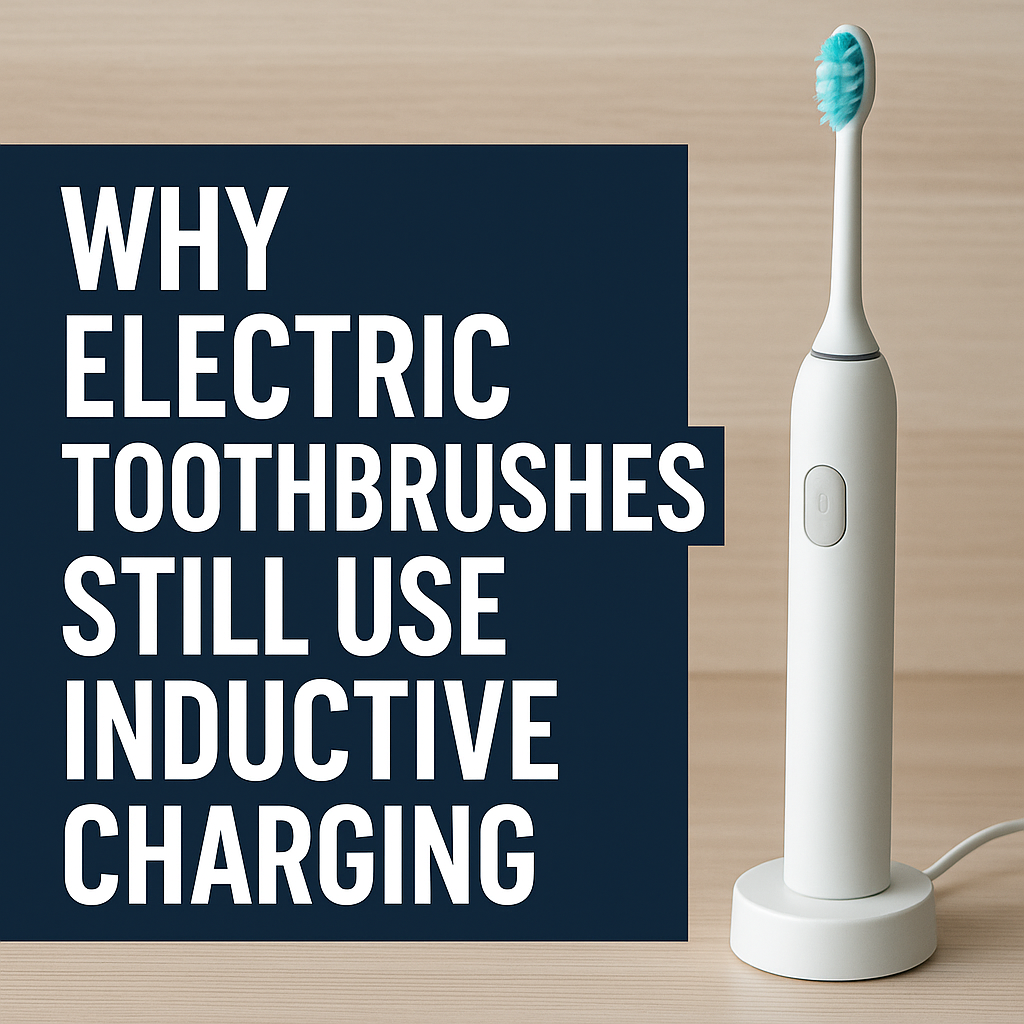
So why are electric toothbrushes — even expensive ones — STILL using those old-school plastic stands with inductive charging coils?
Why not just put a USB-C port on the toothbrush and be done with it?
Is it laziness?
Cost cutting?
Some engineering limitation?
The truth is more interesting — and more important — than people realize.
Today, we’re breaking down why electric toothbrushes still use inductive chargers, why USB-C isn’t the default, and the actual physics behind “charging through plastic.”
Let’s get into it.
⚡ The First Truth: Toothbrushes Live in a Hostile Environment
Your toothbrush experiences:
- water
- toothpaste foam
- steam
- condensation
- soap
- humidity
- constant wet handling
- accidental drops in the sink
- bacteria
- cleaning chemicals
If you put a USB-C port on a toothbrush, you’d have to deal with:
- corrosion on the pins
- water ingress
- bacteria buildup
- contamination of the contacts
- metal wear
- repeated mechanical stress
- accidental charging while wet
- short circuits
USB-C ports on a toothbrush would last weeks, maybe months, not years.
Inductive coils solve this entire problem:
✔ no metal contacts
✔ completely sealed housing
✔ waterproof forever
✔ zero corrosion
✔ safe to charge when dripping wet
✔ no shock hazard
This is not a flaw — it’s deliberate engineering.
⚡ Reason #1: True Waterproofing Requires a Fully Sealed Body
Electric toothbrushes need to meet IP standards:
- IPX7 (submersible 1 meter, 30 mins)
- sometimes IPX8
You CANNOT get IPX7 with a USB-C port unless you:
- use silicone port covers
- add gaskets
- add internal drainage channels
- add pressure equalization
- add extensive sealing mechanisms
All that adds cost, complexity, and failure points.
Inductive charging means:
The entire toothbrush body is a sealed plastic tube.
No holes. No ports. Zero water ingress.
For a device that spends its entire life in a wet bathroom, this matters.
⚡ Reason #2: Inductive Charging Prevents User Shock
USB-C on a wet toothbrush introduces risk:
- wet metal + 5V power = shock hazard
- saliva + water = conductive
- wearing metal braces increases risk
- small cuts in gums increase sensitivity
Inductive charging eliminates exposed conductors.
It’s impossible to shock yourself with an inductive base.
This is not marketing — it’s safety engineering.
⚡ Reason #3: Charging Through Plastic Is Simple, Cheap, and Reliable
Inductive charging in toothbrushes is intentionally low power:
- 0.5W
- 1W
- 2W at most
This low power level:
- produces almost no heat
- never stresses the battery
- makes coils simpler
- reduces failure rate
- increases lifespan
A toothbrush battery charges slowly on purpose to last longer.
USB-C would allow fast charging — which sounds great…
…but high charge current in a small sealed device = heat.
Heat inside a sealed environment = battery death.
Manufacturers avoid this.
⚡ Reason #4: The Charge Base Doubles as a Stand
This is a UX win most people overlook.
The inductive base:
- holds the toothbrush upright
- keeps the brush head away from bacteria
- allows airflow to dry
- organizes the bathroom counter
- hides electronics
- prevents the brush from rolling around
- fits different models with the same base
If toothbrushes switched to USB-C:
- they’d need a charging dock anyway
- or you’d lay them down wet on the counter
- which would grow mold or mildew
The inductive stand serves two purposes:
charging + hygienic positioning.
⚡ Reason #5: Inductive Isolation Prevents Metal Fatigue and Wear
USB-C ports wear out.
Waterproof USB-C ports wear out fast.
Imagine:
- brushing twice a day
- rinsing the toothbrush
- plugging/unplugging while wet
- moisture entering the port
- toothpaste residue in the contacts
USB-C ports have 24 tiny pins that corrode easily.
Inductive coils?
Zero wear. Zero mechanical stress.
Many inductive toothbrushes last 10+ years.
Try that with a USB-C port exposed to toothpaste.
⚡ Reason #6: Bathroom Outlets Create New Safety Requirements
Most bathrooms require:
- GFCI/RCD protection
- splash resistance
- isolation from sinks
Inductive chargers:
- keep high-voltage electronics far from water
- localize AC power to the base
- allow the brush to remain fully low-voltage and isolated
If a USB-C port became contaminated with water:
- the toothbrush could short
- the charger could overheat
- metal could corrode
Inductive charging isolates the toothbrush from the mains completely.
⚡ Reason #7: Toothbrush Batteries Don’t Need Fast Charging
A toothbrush only uses:
1–3 Wh per week.
This is tiny.
Your phone uses 50–80 Wh per week.
A toothbrush battery can:
- charge slowly
- charge overnight
- last 7–30 days
There is no benefit to USB-C fast charging, because toothbrushes simply don’t need it.
Inductive charging is perfectly adequate.
⭐ Amp Nerd Fun Facts
- Electric toothbrushes were among the first consumer wireless charging devices — long before smartphones.
- Many toothbrush chargers still use the same 1970s charging frequency.
- Some models can charge through 5–10 mm of plastic, which smartphones cannot.
- The toothbrush coil is often glued with epoxy that withstands boiling temperatures.
- Toothbrush inductive charging is so simple that it uses only two real components: a coil and a diode.
- Many inductive chargers still work for 20+ years despite daily wet/dry cycles.
⚡ Amp Nerd Summary
Electric toothbrushes still use inductive chargers because:
- USB-C can’t survive wet environments
- inductive coils enable true waterproofing
- there’s no shock risk
- they don’t need fast charging
- inductive stands improve hygiene
- sealed housings last longer
- toothbrush batteries have low power needs
- reliability is dramatically higher
This isn’t outdated tech —
it’s the right engineering choice for the job.