
Power strips are everywhere:
- Under desks
- Behind TVs
- Next to beds
- In gaming setups
- In workshops and garages
They quietly sit there for years, collecting dust, running more and more devices… until one day:
- Something smells burnt
- A plug melts
- Plastic turns brown
- Or, in the worst cases, the strip actually catches fire
Most people only replace a power strip when it physically dies.
But electrically, a strip can become dangerous long before it stops working.
Today, we’re going to do what the packaging never tells you:
How to spot a dangerous power strip before it becomes a problem.
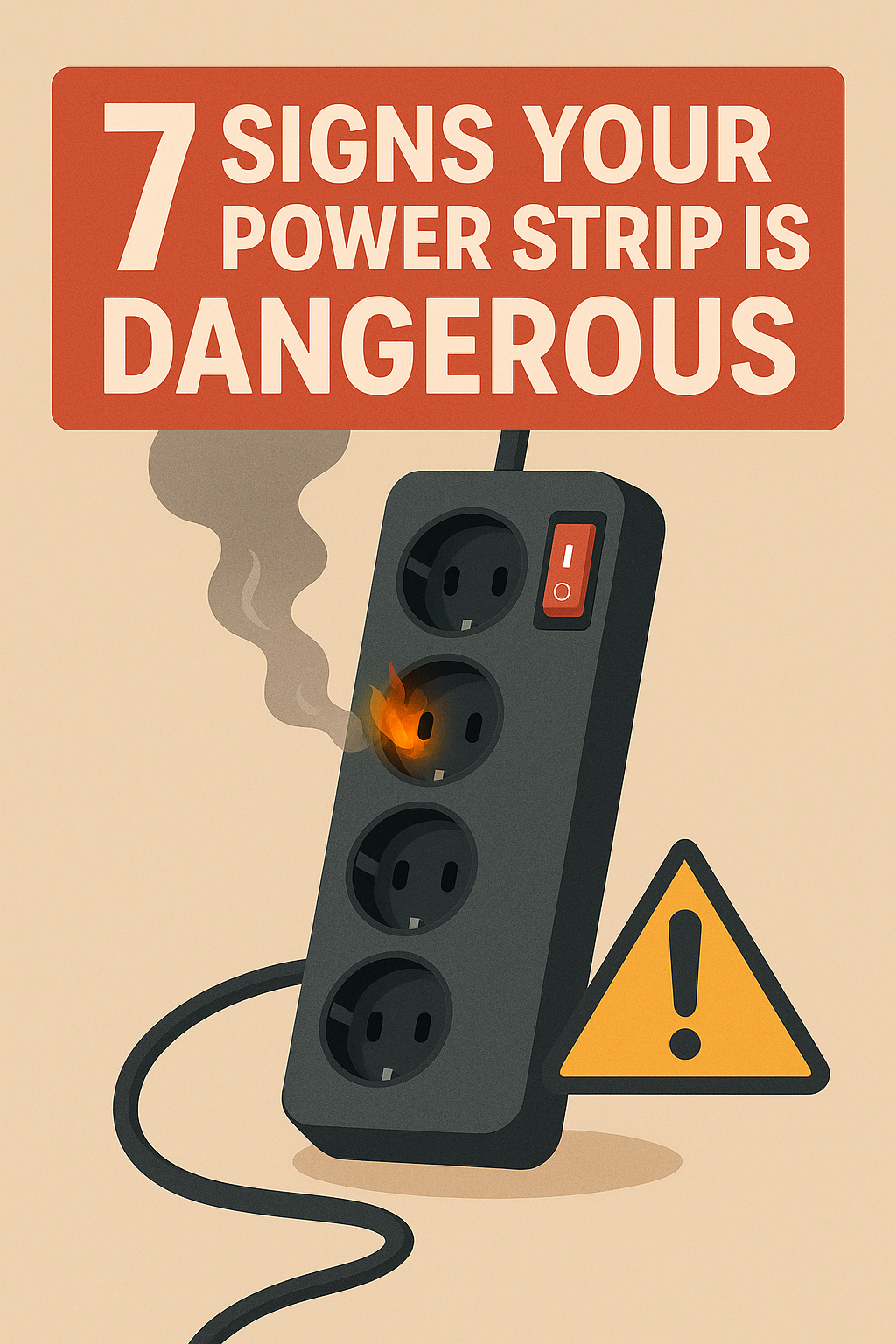
Here are 7 warning signs that your strip is done and should be retired immediately.
1. The Power Strip Feels Warm or Hot in Normal Use
A little warmth at the plug of a high-power device can be okay.
But the body of the strip itself should not be getting noticeably warm.
If:
- the plastic feels hot to the touch
- the strip is warmer than all the devices plugged into it
- the cord feeding it is getting hot
…that’s a big red flag.
Why this happens:
- High contact resistance at internal connections
- Thin internal copper struggling to handle the current
- Long-term wear or corrosion on sockets
- Overloaded strip (too much total current)
Heat = wasted power.
And in a closed plastic housing on the carpet, that heat can build up to ignition levels.
Quick test:
- Unplug everything
- Plug in just one device
- Run it for 10–15 minutes
- Feel the strip and cord
If it’s significantly warm with only a moderate load? That strip is not healthy.
2. Discoloration, Yellowing, or Burn Marks on Plastic
Visual clues are some of the easiest and most reliable signs of trouble.
Look closely around:
- each outlet socket
- the switch area
- the plug that goes into the wall
- the first few cm of the cord
If you see:
- brown or yellow tinge around a socket
- melted or shiny, “glossy” plastic patches
- dark scorch marks
- any bubbling, warping, or sagging
…heat has already been there.
Electrical fires don’t start from cold plastic.
Discoloration is the power strip literally saying:
“This spot has overheated before. This will happen again.”
Once thermal damage has occurred:
- internal plastic may have softened
- spring contacts may have lost tension
- copper may have oxidized or pitted
All of that increases resistance further, meaning even more heat next time.
3. Plugs Wiggle, Fall Out, or Feel Too Loose
When a power strip is new, plugs:
- slide in firmly
- require a bit of force
- don’t sag or fall out on their own
Over time:
- internal spring contacts wear
- metal loses temper from heating
- plating erodes from repeated insertions
- cheap strips lose grip very quickly
If, when you plug something in:
- it feels loose
- it wobbles visibly
- a gentle tug causes flicker
- gravity alone can make it partially slide out
…that’s not just annoying. It’s dangerous.
Loose contacts cause micro-arcing:
- tiny, rapid electrical arcs
- concentrated at a small contact point
- generating intense local heat
That heat:
- damages plastic
- creates carbon deposits
- increases resistance further
It’s a feedback loop that ends in a burned plug or socket.
Rule: if a plug doesn’t fit snugly and securely, that outlet is done. Retire the strip.
4. You Hear Crackling, Buzzing, or Sizzling Sounds
Electricity is supposed to be silent.
If you hear:
- faint crackling
- frying/sizzling noise
- a buzzing sound that changes when you wiggle a plug or load
…that’s a serious sign of arcing.
Arcing is:
- electricity jumping through air over small gaps
- extremely hot (thousands of degrees at the arc point)
- capable of melting metal and plastic
- how many electrical fires start
Inside a power strip, arcing often occurs:
- at loose outlets
- at the switch
- at overstrained internal connections
- at damaged bus bars
If you hear any noise coming from a strip:
Unplug it. Don’t tap it, don’t “just see if it stops”. It’s not a radio.
Noise = arcing. Arcing = immediate retirement.
5. The Switch or Indicator Light Is Intermittent or Flickers
Most strips have:
- a rocker switch
- maybe a breaker reset button
- one or more LEDs (power, protected, grounded)
If you notice:
- the LED flickering when you touch the strip or move plugs
- the LED cutting in/out with very slight movement
- the switch feeling spongy, loose, or inconsistent
- the strip turning off with tiny bumps or taps
…it usually means the internal contacts in the switch or wiring are failing.
Internally, many cheap strips use:
- thin copper strips
- riveted or crimped connections
- small contact points in the switch
Once those loosen or corrode:
- they create resistance
- they can arc under load
- they get hot
- they can liquify plastic around them
A flickery light is not just a cosmetic issue. It’s often:
The only hint you get that something inside is barely making electrical contact.
6. The Strip Is Old, Overused, or Has Survived “Mystery Events”
Age alone matters, especially for surge protectors, but even plain strips physically wear out over time.
Questions to ask yourself:
- “How old is this power strip, honestly?”
- “Has it been in constant use under my desk for 5–10+ years?”
- “Has it ever smelled weird, even once?”
- “Have I ever overloaded it with heaters / irons / dryers / multiple PCs?”
- “Did lights flicker or the breaker trip while it was loaded?”
- “Has it been used in a dusty, damp, or very hot place?”
If the answer is “yes” to any of:
- It’s more than ~5–7 years old and heavily used
- It has powered high-wattage devices regularly
- It has lived in a garage, workshop, or near heaters
…then it’s already beyond the design life of most budget strips.
Also, if:
- lightning hit nearby
- power flickered hard
- the strip was in use during a big surge
…then internal connections and, if present, MOVs may already be degraded.
Power strips are not heirlooms. Replace them before they die of old age.
7. It’s Used Completely Wrong (Daisy Chains, Heaters, and Hidden Cords)
Sometimes the danger isn’t the strip itself — it’s how it’s abused.
Red-flag scenarios:
❌ Daisy-chaining strips and cords
- Wall → strip → strip → extension → more devices
- Every link adds resistance and heat
- The first strip in the chain gets hammered
- This is how plugs and outlets melt
❌ Running high-watt appliances through it
- Space heaters
- Hair dryers
- Irons
- Air fryers
- Microwaves
Power strips are rarely designed for 12–15 A continuous. That’s what these appliances pull.
❌ Hidden under rugs, behind couches, or buried in dust
- Heat from resistive losses can’t escape
- Dust accumulates in sockets
- Nearby flammables = easy ignition
❌ Outdoor or damp use of indoor-only strips
- Moisture + dust + mains = arcing and corrosion
- Indoor strips are not sealed or UV-stable
If you recognize your setup in any of that, the problem is both:
- the strip
- and how it’s being used
Even a good strip becomes dangerous when misused like this.
Quick Safety Checklist: When to Replace a Power Strip Immediately
Retire (throw away, don’t donate) the strip if:
- 🔥 It feels hot during normal use
- 🔥 You see any discoloration, melting, or scorch marks
- 🔥 Plugs fit loosely or fall out easily
- 🔥 You hear buzzing, crackling, or sizzling
- 🔥 The switch or indicator LED flickers or feels unreliable
- 🔥 It’s more than 5–7 years old and heavily used
- 🔥 It’s been abused with heaters, irons, or daisy chains
Power strips are cheap.
Electrical fires are not.
Amp Nerd Fun Facts
- Many cheap strips use thin copper and weak springs, losing over half their grip strength after a few hundred plug cycles.
- A single loose connection inside a strip can create 20–30 W of heat, constantly, without ever tripping the breaker.
- Most strips have no internal temperature sensing — they’ll cook themselves until something deforms or burns.
- “Protected” lights on surge strips often tell you the strip has power, not that surge protection is still working.
- That “one time it smelled weird” was not a coincidence — plastic and dust don’t smell like that for fun.
Amp Nerd Summary
A power strip becomes dangerous long before it stops working.
The big warning signs:
- Heat – strip or plug is warm/hot in normal use
- Discoloration – yellowing, browning, burn marks
- Loose sockets – plugs wiggle, sag, or fall out
- Noises – crackling, sizzling, buzzing when loaded
- Weird behavior – flickering switch or LEDs
- Age and abuse – old, overused, previously overloaded
- Bad usage – daisy-chained, hidden, used with heaters or hair dryers
When in doubt, replace the strip.
They’re designed to be consumables, not permanent infrastructure.